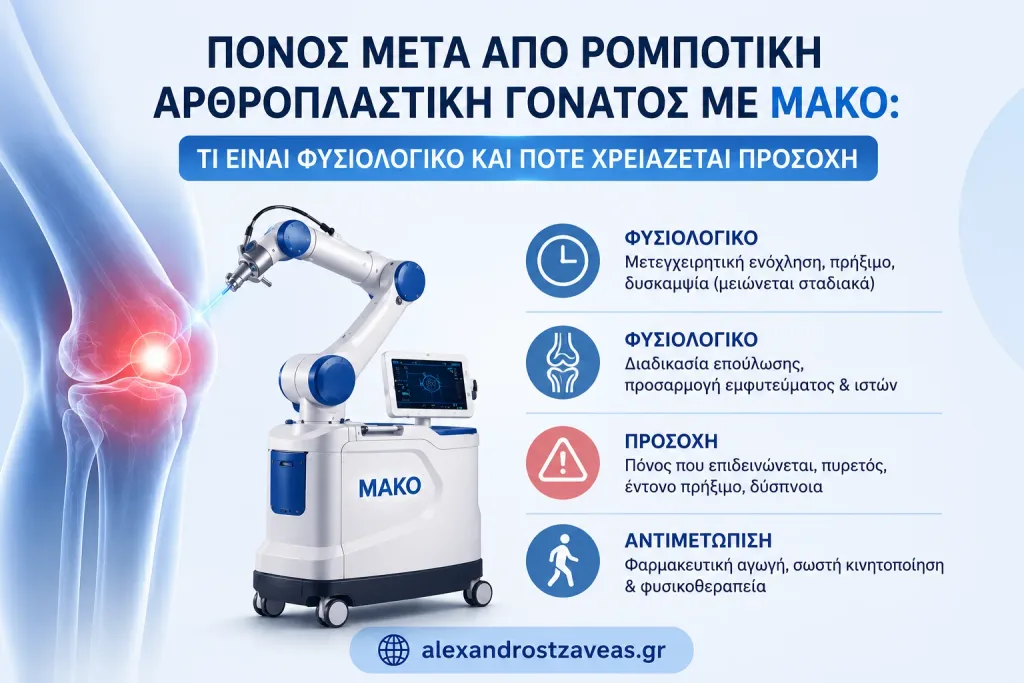

Pain after MAKO robotic knee arthroplasty: what is normal and when to take care is a subject that concerns many patients. Understanding normal levels of pain and the symptoms that call for attention can help with the rehabilitation process. It is important to monitor progress and to recognise changes that may indicate complications.
Pain after MAKO robotic knee arthroplasty is one of the most common concerns for patients before and after the operation. Although knee arthroplasty aims to reduce the chronic pain caused by wear of the joint, it is normal to have postoperative discomfort in the first days or weeks. MAKO robotic assistance helps the orthopaedic surgeon with more accurate planning and better positioning of the implants. This can contribute to a more controlled surgical procedure, but it does not mean that the patient will feel no pain at all after the operation. Postoperative pain is part of the normal healing process and is managed with appropriate medication, mobilisation and physiotherapy.
Pain after MAKO robotic knee arthroplasty: what is normal and when to take care
After MAKO robotic knee arthroplasty, the patient may feel pain around the knee, a pulling sensation, heaviness, swelling or stiffness. These symptoms are to be expected, especially in the first days after the operation.
The pain may be more intense when the patient stands up, walks, does physiotherapy or bends the knee. It usually decreases gradually over time, as the inflammation subsides, mobility improves and the muscles around the joint become stronger.
Normal symptoms may include:
Pain on moving the knee
Swelling around the joint
A feeling of warmth in the area
Stiffness, mainly in the first few days
Discomfort during physiotherapy
Tiredness after walking
Mild pain at night
These symptoms should gradually improve and should be kept under control by following the medical team’s instructions.
Why there is pain after robotic knee arthroplasty
The pain after the operation is due to the surgical procedure, to the healing of the tissues and to the joint adapting to the new implant. Even when the operation is performed with robotic assistance and greater accuracy, the body needs time to recover.
During rehabilitation, the muscles, ligaments and tissues around the knee are affected by the operation and need gradual retraining. Physiotherapy may cause discomfort at first, but it is essential if mobility is to return and stiffness is to be avoided.
The aim is not for there to be no pain at all from the first day, but for the pain to be controlled, to decrease gradually and not to prevent safe mobilisation.
When pain needs attention
Although pain is to be expected after knee arthroplasty, there are situations in which the doctor should be contacted immediately. Patients should be informed about the symptoms that are not considered normal or that may indicate a complication.
Attention is needed when there is:
Pain that worsens instead of decreasing
Marked swelling that appears suddenly
Fever or shivering
Marked redness around the wound
Fluid, pus or bleeding from the incision
Difficulty breathing or chest pain
Sudden pain in the calf
Inability to bear weight on the leg
A feeling of instability or marked difficulty in moving
These symptoms do not always mean that there is a serious problem, but they must be assessed promptly by the orthopaedic surgeon.
How pain is managed after the operation
Pain is managed with a combination of medication, correct mobilisation, physiotherapy and practical advice for home. The doctor gives an individualised plan according to the patient’s age, history and needs.
Management usually includes analgesic drugs, anti-inflammatories where they are permitted, instructions on ice, elevation of the limb and an exercise programme. Correct use of walking aids, such as crutches or a walking frame, also helps to reduce the load on the knee.
Patients must not change their medication themselves or stop drugs abruptly without consulting the doctor. If the pain is not adequately controlled, the medical team should be informed.
The role of physiotherapy in pain
Physiotherapy is essential after MAKO robotic knee arthroplasty. Although the exercises may cause temporary discomfort, they help to reduce stiffness, to improve the circulation, to strengthen the muscles and to restore walking.
Immobility can make the knee stiffer and prolong recovery. Excessive effort, on the other hand, can increase swelling and pain. Physiotherapy must therefore be carried out gradually and in accordance with the instructions of the doctor and the physiotherapist.
Patients should tell the rehabilitation team if the pain is excessive, if it does not settle after exercise or if it is accompanied by other worrying symptoms.
The role of the orthopaedic surgeon
Proper follow-up after the operation is decisive for the safe management of pain. The orthopaedic surgeon assesses the healing, the mobility, the swelling, the stability of the knee and the progress of physiotherapy.
Dr Tzaveas, with experience in modern arthroplasty techniques and in MAKO robotic assistance, can guide the patient at every stage of the postoperative course. Individualised follow-up helps the patient to know which pain is to be expected, which symptoms need attention and when activity can safely be increased.
Conclusion
Pain after MAKO robotic knee arthroplasty is usually normal in the first days and weeks, as the body heals and the knee adapts to its new function. A gradual reduction in pain, improvement in mobility and progress in walking are positive signs of recovery.
Attention is needed when the pain worsens or is accompanied by fever, marked swelling, redness, discharge from the wound or symptoms in the calf and in breathing. With proper medical guidance, physiotherapy and consistency in following instructions, patients can manage postoperative pain more safely and gradually return to their everyday life.